
- PV Products
PV balance of system
Combiner, meter and grid-connection boxes. 130 GW+ of PV products supplied.
All PV products - Energy Storage
261 Series Standard and PV-storage-diesel versions
418 Series DC-side and all-in-one versions
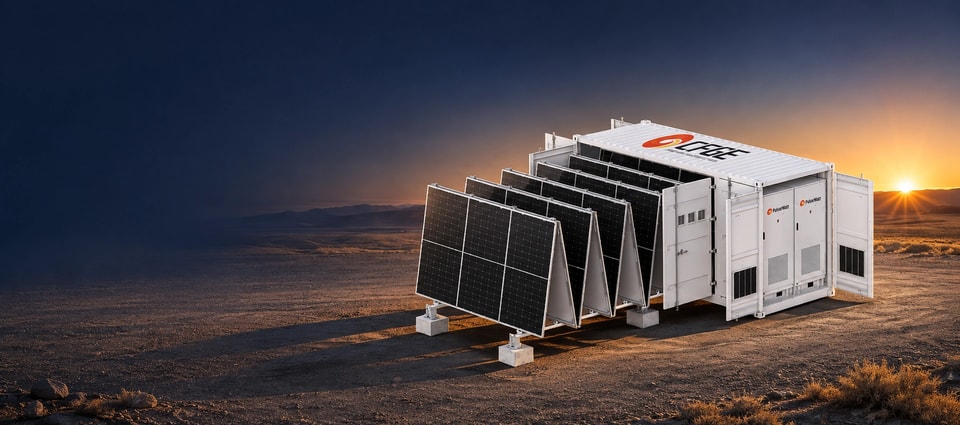
PulsarWatt Micro Grid AIO Container 20 ft · 90 kWp PV + 261 kWh
STS Cabinet 250 kW / 500 kW · On/off-grid transfer
- Grid-Connection Cabinet Grid tie for storage To be updated
AC Combiner (Paralleling) Cabinet Two 261 cabinets, one grid tie
More storage products Container & Air-Cooled Telecom Base Station Residential & Portable Elevator Energy Saving CFOS Platform - Markets & Solutions
- Projects
- Resources
- News & Insights


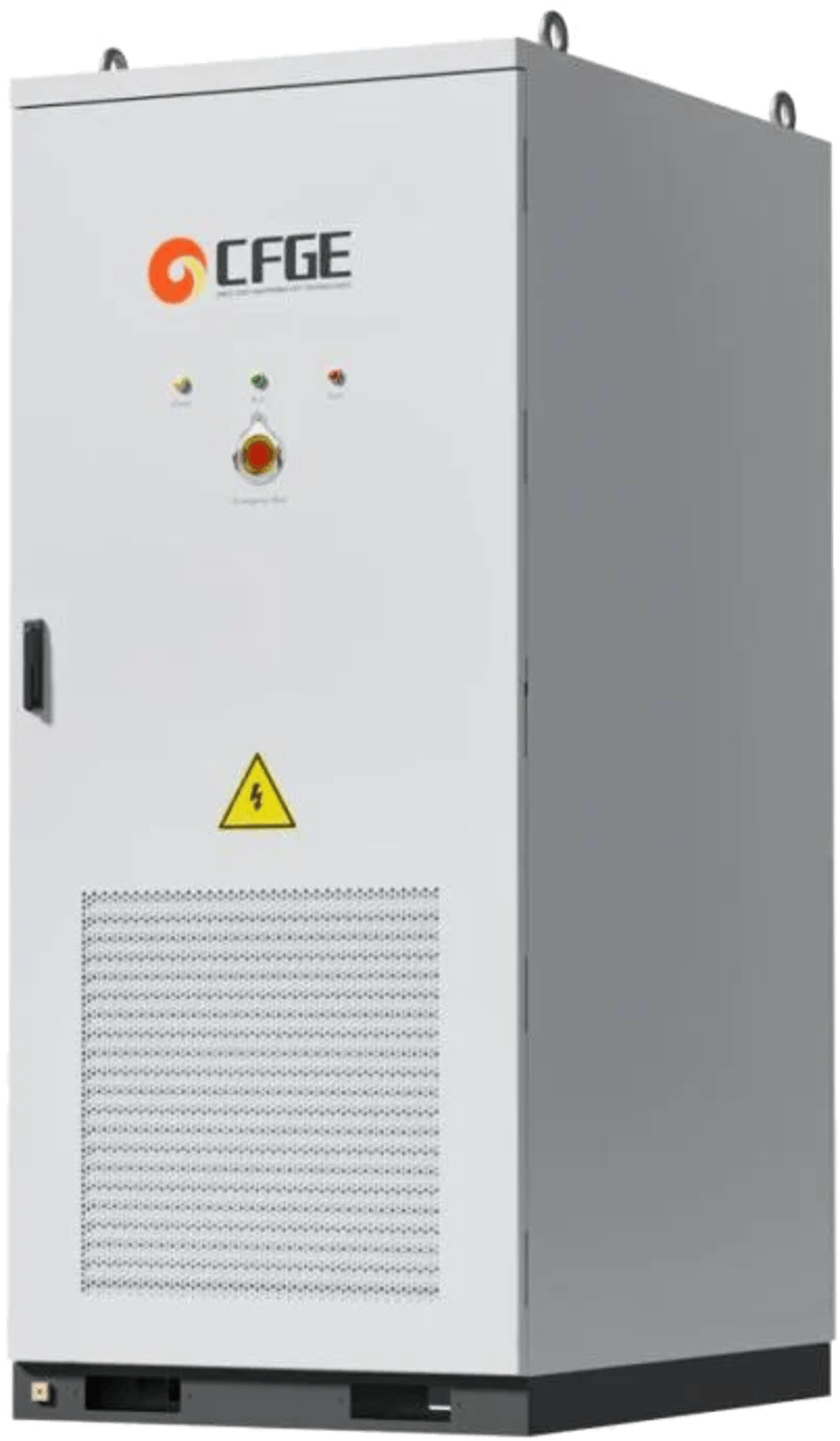
How to Select a 261 kWh Liquid-Cooled Energy Storage Cabinet for C&I Sites
A 261 kWh liquid-cooled cabinet is a common building block for commercial and industrial (C&I) energy storage: large enough to shave a real demand peak, and small enough to stand beside a factory or commercial building. This guide covers the checks that decide whether it fits your site and how many cabinets you need. CFGE figures come from the 261 Series datasheets.
1. Define the job first
- Peak shaving and demand control: discharge during peaks to stay under a target demand.
- Peak-valley shifting: charge at low tariffs and discharge at high tariffs.
- PV self-consumption: store surplus solar generation and use it later.
- Backup or microgrid: keep loads running without the grid. Off-grid operation is optional on the storage cabinet and supported on the PV-storage-diesel all-in-one.
2. Size power and energy separately
Power and energy answer different questions. Power (kW) must cover how far the peak rises above your target. Energy (kWh) must cover how long it stays there. Use interval data from your meter, ideally a full year, because one bad month can set the demand charge.
Each 261 Series cabinet is rated 125 kW and 261 kWh, so it can discharge at rated power for about two hours before allowing for depth of discharge and conversion losses.
Worked example, for illustration only. A site peaks at 600 kW and wants to stay under 450 kW. The peak lasts up to two hours, so the system must deliver 150 kW for two hours, or 300 kWh at the meter.
- Power: one cabinet gives 125 kW, which falls short. Two give 250 kW.
- Energy: two cabinets hold 522 kWh. At 90% depth of discharge that is about 470 kWh on the battery side, which leaves a margin over 300 kWh after conversion losses.
In this example power sets the cabinet count. On sites with long, shallow peaks, energy usually sets it instead. Check the final sizing against your real load profile and tariff.
3. Choose the version for your market
- Mainland China, CFGE 125K/261-PT/CN: GB/T 36276, GB/T 34131, GB/T 34120 and GB 44240.
- Global, CFGE 125K/261-PT/GL: IEC 61000-6-2, IEC 61000-6-4, IEC 62477, IEC 62619, IEC 63056 and UN 38.3, plus grid-side certifications such as VDE 4105, AS 4777.2, G99 Type A and EN 50549.
- Europe, CFGE 125K/261-PT/EU: the global list plus UL 9540A.
- PV-storage-diesel all-in-one, CFGE 125K/261-PV-AIO-PT/GL: adds built-in MPPT and genset control for microgrid sites.
Confirm which certificates your grid operator accepts, and ask for copies before you order.
4. Check the site
- Footprint and weight: the storage cabinet measures 980 × 1,350 × 2,300 mm (W × D × H) and weighs 2.7 t. The all-in-one measures 1,330 × 1,350 × 2,150 mm and weighs 2,800 kg. Allow for the foundation and service clearance.
- Enclosure: IP55 with liquid cooling. The storage cabinet is rated for outdoor installation with C4 corrosion protection and bottom cable entry.
- Temperature: -20 to +60 °C for the storage cabinet and -20 to +50 °C for the all-in-one, with derating above 45 °C.
- Altitude: up to 3,000 m with derating above 2,000 m for the storage cabinet, and up to 2,000 m for the all-in-one.
- Fire protection: pack-level protection plus total flooding suppression on the storage cabinet, and cabinet-level aerosol plus water firefighting on the all-in-one. Check these against your local fire code.
5. Plan the grid connection and expansion
- AC side: 125 kW at 400 V AC. The storage cabinet is non-isolated. The all-in-one needs an external 0.4/0.4 kV isolation transformer on the AC output side, sized for the project.
- Two cabinets, one grid tie: the 250 kW AC Combiner Cabinet (2-in-1) combines two 261 Series cabinets through a 630 A main breaker.
- On-grid and off-grid transfer: the Two-Input Grid Transfer Cabinet with STS works with one or two cabinets.
- Communication: LAN, 4G, RS485 and CAN, with direct EMS communication with PV inverters on the storage cabinet.
6. What to send for a configuration
- Site location, grid voltage and frequency
- Interval load data or recent electricity bills, and your tariff
- Your main goal: peak shaving, PV self-consumption, backup or microgrid
- Any existing PV or generators, and the space available
- The standards your project or grid operator requires
CFGE completes scheme reviews within 48–72 hours of receiving site information. Contact our engineers, or download the datasheets from the resource center.
About CFGE
Changfeng Green Energy (CFGE) has designed and built PV balance-of-system equipment in Changshu, Suzhou, since 2007, and C&I energy storage systems since 2022.
The current range includes PV combiner boxes, meter and grid-connection boxes, the liquid-cooled 261 Series and 418 Series cabinets, and the PulsarWatt Micro Grid AIO Container.
Contact info@cf-ge.com, follow CFGE on LinkedIn, or read the company facts.


Talk to us
Questions after reading?
Site, capacity and timeline — we reply with a configuration.
- info@cf-ge.com
- +86 173 0062 9666
- Building 13-2, No. 58 Yangguang Avenue, Changshu, Suzhou, Jiangsu, China

PV balance-of-system equipment and energy storage systems, designed and built in Changshu, Suzhou since 2007.