
- PV Products
PV balance of system
Combiner, meter and grid-connection boxes. 130 GW+ of PV products supplied.
All PV products - Energy Storage
261 Series Standard and PV-storage-diesel versions
418 Series DC-side and all-in-one versions
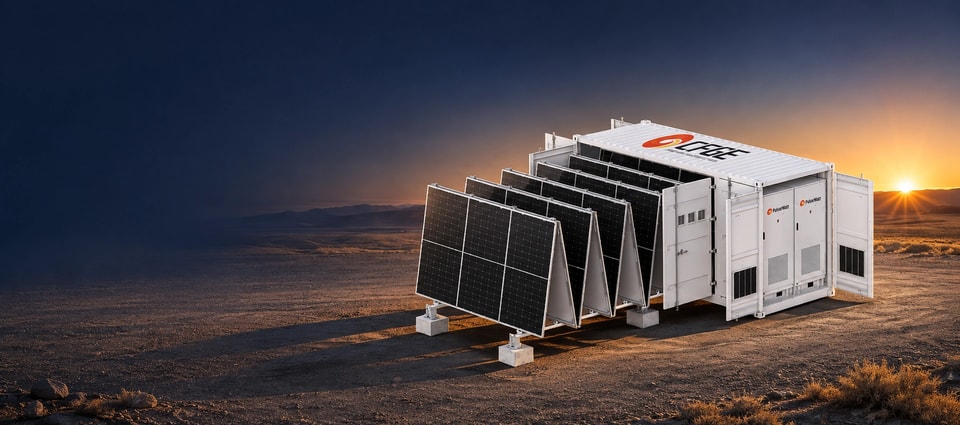
PulsarWatt Micro Grid AIO Container 20 ft · 90 kWp PV + 261 kWh
STS Cabinet 250 kW / 500 kW · On/off-grid transfer
- Grid-Connection Cabinet Grid tie for storage To be updated
AC Combiner (Paralleling) Cabinet Two 261 cabinets, one grid tie
More storage products Container & Air-Cooled Telecom Base Station Residential & Portable Elevator Energy Saving CFOS Platform - Markets & Solutions
- Projects
- Resources
- News & Insights


DC-Coupled PV-Storage-Diesel Microgrid Design: A Practical Guide
Remote and weak-grid sites often rely on diesel generators. Adding PV and storage can cut generator run-hours while the genset stays available as a backup source. This guide explains how a DC-coupled PV-storage-diesel system fits together and what to check when you design one, using figures from two CFGE products: the 261 Series PV-storage-diesel all-in-one and the PulsarWatt Micro Grid AIO Container.
What DC coupling means
In a DC-coupled system, the PV array connects to the battery DC side through an MPPT DC/DC converter, and one bidirectional PCS supplies the AC loads. Generators and any available grid connect on the AC side. Energy going from PV into the battery avoids a second conversion through AC.
In an AC-coupled system, storage connects on the AC side with its own PCS next to the PV inverters. That leaves an existing PV system untouched, which is why AC coupling is common for retrofits. DC coupling is a natural fit for new-build and off-grid sites.
The main building blocks
- PV array and MPPT: convert and control PV power onto the battery DC side.
- Battery: balances generation and load. Both CFGE products use 314 Ah LFP cells and 261 kWh of energy.
- PCS: supplies the AC loads and sets the off-grid voltage and frequency. Both products are rated 125 kW.
- Genset: covers long periods of low PV and low state of charge (SOC).
- EMS: decides which source runs, based on demand, SOC and grid availability.
Design checks
Match the PV array to the MPPT inputs
- 261 Series all-in-one: eight inputs at 15 kW each, 120 kW of total MPPT power (2 × 60 kW), 450–700 V DC operating range and 700 V DC maximum.
- PulsarWatt: four inputs at 15 kW each, 60 kW of total MPPT power and a 90 kWp array, with up to 45 A per string at 150–1,000 V.
String voltage rises in cold weather, so check strings against the maximum input voltage at the lowest expected site temperature.
Define the operating priority
A typical sequence runs PV first, uses the battery to balance power, and brings in other sources according to grid availability and SOC. In PulsarWatt, available grid power supplements PV and storage first; without grid power, low SOC starts the genset.
Set the genset logic
Both products support genset start/stop control, SOC-based automatic start and stop, and genset power dispatch. Choose SOC thresholds that protect the battery without short-cycling the generator, and check the genset rating against the loads it must carry and the charging power you want from it.
Plan the AC side and isolation
- 261 Series all-in-one: 230/400 V AC, 3P + N + PE, 50/60 Hz. An external 0.4/0.4 kV isolation transformer is required on the AC output side, sized for the project.
- PulsarWatt: 400 V AC, 50 Hz, with the isolation transformer integrated in the distribution enclosure.
Check transfer and black start
PulsarWatt coordinates its STS and PCS for a 20 ms grid transfer, subject to agreed test conditions. Without an external AC source, it supports black start and staged load restoration when starting conditions are met. List which loads must ride through a transfer, and restart large motor loads in stages.
Cabinet or container?
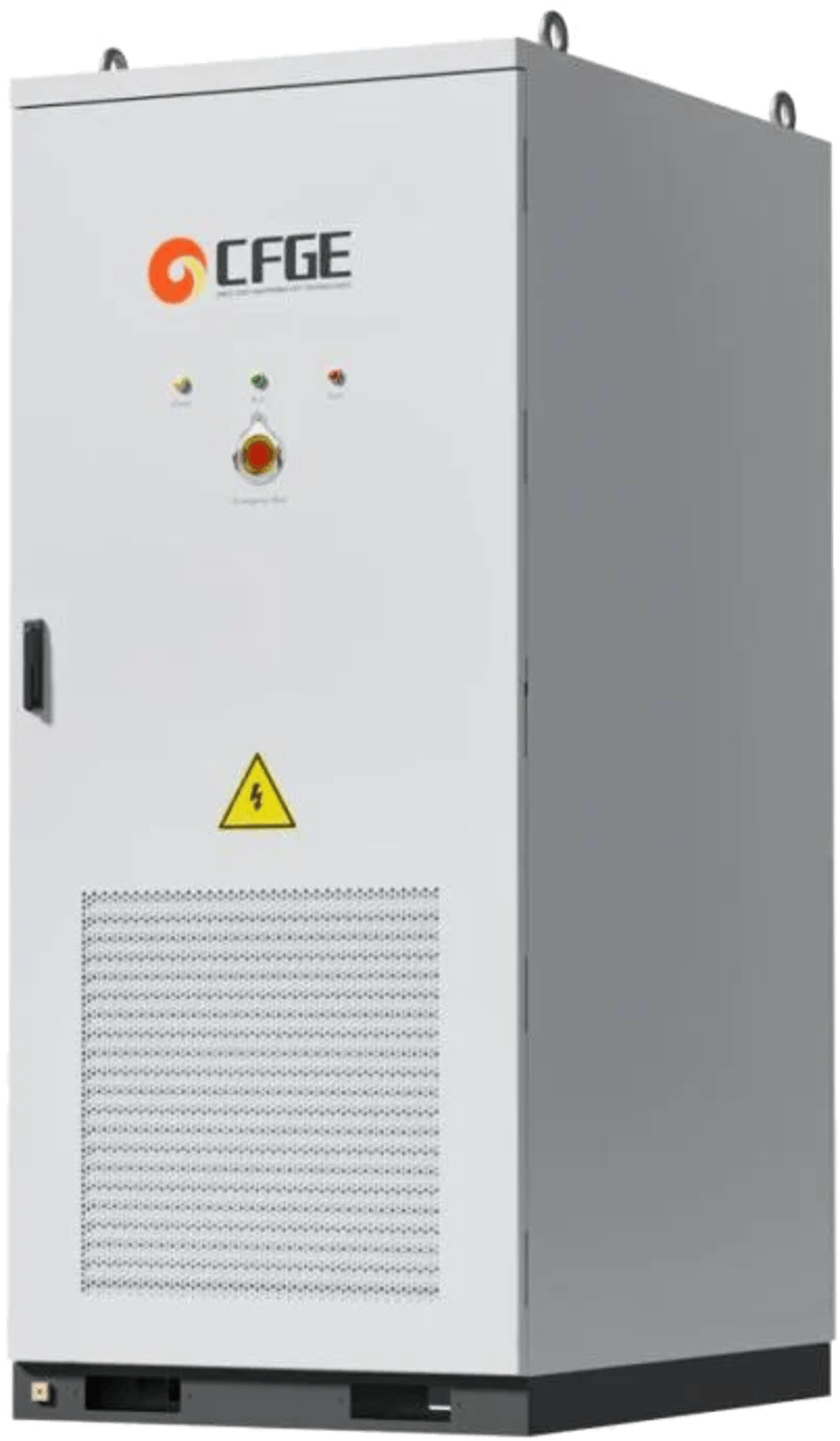
- 261 Series all-in-one: an outdoor cabinet for sites that already have, or will build, their own PV array. It offers up to 120 kW of MPPT power.
- PulsarWatt: PV, MPPT, storage, PCS, STS, EMS and distribution in one 20 ft container for weak-grid, off-grid and temporary power. It weighs up to 17 t in transport and deploys to 28.5 m, so check access and ground space. Site deployment requires securing the array, wiring, earthing and commissioning.
What to collect before design
- A load profile, including peak loads and motor starts
- Roof or ground area for PV, and the site location for irradiation data
- Existing genset rating and fuel cost
- Grid availability, voltage and frequency
- Ambient temperature range, altitude and transport access
Send this information to our engineers for a first configuration, or read more on the Markets & Solutions page.
About CFGE
Changfeng Green Energy (CFGE) has designed and built PV balance-of-system equipment in Changshu, Suzhou, since 2007, and C&I energy storage systems since 2022.
The current range includes PV combiner boxes, meter and grid-connection boxes, the liquid-cooled 261 Series and 418 Series cabinets, and the PulsarWatt Micro Grid AIO Container.
Contact info@cf-ge.com, follow CFGE on LinkedIn, or read the company facts.


Talk to us
Questions after reading?
Site, capacity and timeline — we reply with a configuration.
- info@cf-ge.com
- +86 173 0062 9666
- Building 13-2, No. 58 Yangguang Avenue, Changshu, Suzhou, Jiangsu, China

PV balance-of-system equipment and energy storage systems, designed and built in Changshu, Suzhou since 2007.